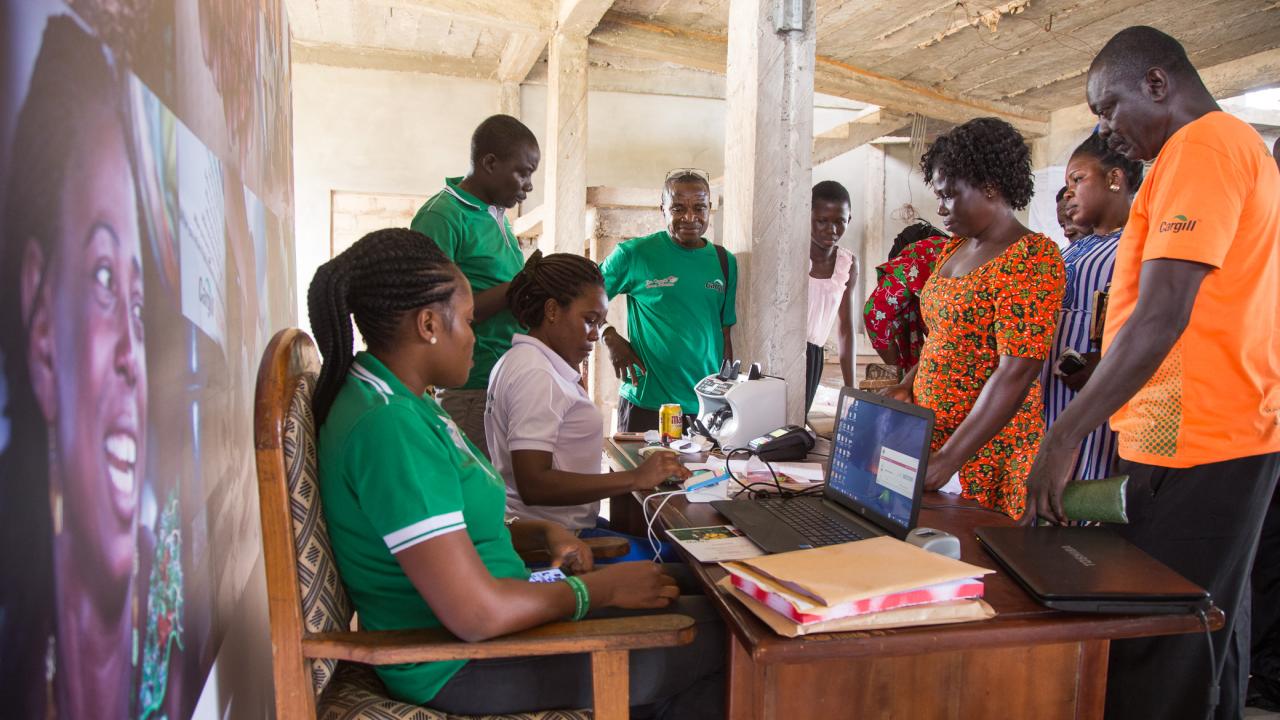
As the world grows ever more connected, access to financial tools has expanded dramatically. Today, 79% of adults worldwide have a bank account, an increase from 51% in 2011. This is a remarkable gain.
Some of the world’s most sophisticated investors have been using Environmental, Social, and Governance (ESG) data for years to help identify companies that perform well over time in the market. Their belief that high ESG scores correlate with high corporate financial performance is now supported by a large and rapidly growing body of research. Deutsche Bank’s much-discussed study, for example, found that 2,200 of ESG studies conducted between 1970 to 2015 report a positive ESG–Corporate Financial Performance (CFP) relation.
Investors are eager to contribute to achieving the SDGs, but don’t yet have sufficient information and tools to make smart investments in a more sustainable future. There is a need for standardized and comparable data, as well as more meaningful dialogue between business, investors & stock exchanges. GRI is ramping up engagement between these groups.
La segunda entrega de nuestro tributo de cuatro partes al legado de la mina Marlin, nos enfocamos en los beneficios sociales que esta mina le ha proporcionado a la región de San Marcos en Guatemala.
La mina Marlin de Goldcorp cesó su producción el 31 de mayo de 2017, marcando el final de más de una década de fuertes lazos comunitarios y prácticas de minería sustentables. Ubicada en el altiplano occidental de Guatemala, en el municipio de San Miguel Ixtahuacan, a aproximadamente 300 kilómetros al noroeste de la Ciudad de Guatemala, Marlin empezó su producción a fines de 2005 y pasó a formar parte del portafolio de Goldcorp con la adquisición de Glamis Gold en 2006. La mina operó como una mina tanto subterránea como a tajo abierto durante 12 años, produciendo 2.3 millones de onzas de oro y 63 millones de onzas de plata.
Many water leaders face a conundrum – they know massive system investments are needed, but have a steep hill to climb to gain necessary approvals and rate recovery for such investments. Stand-alone, multimillion dollar technology programs often take a back seat to repairing and replacing aging distribution system assets.
Richard Choularton is a senior associate focused on food security and climate resilience with Tetra Tech International Development Services. As the former Chief of the World Food Programme’s Climate and Disaster Risk Reduction Unit, he is a recognized, world-renowned expert in climate change adaptation and risk mitigation, resilience, food security, emergency preparedness, and early warning systems.
The SCS Kingfisher certification mark is showing up on an increasing number of products around the world. It differentiates companies that are making...
In states where Key has a presence, there are approximately 1.7 million low- to moderate-income (LMI) households. Many LMI individuals don’t have bank...
Subaru is dedicated to supporting those who need it the most in our communities. From donating food to Feeding America, providing essential items to...
Cascale shares insights regarding policy and regulation impacting the consumer goods industry, and highlights how it's supporting members prepare for...
Come learn from Antea Group experts on a variety of topics. We produce webinars monthly and attend events regularly to keep in touch with current and...
DP World provides comprehensive data center logistics capabilities including assembly of server racks, mission-critical supply chain management from...