As the world grows ever more connected, access to financial tools has expanded dramatically. Today, 79% of adults worldwide have a bank account, an increase from 51% in 2011. This is a remarkable gain.
When was the last time you sent someone a letter in the mail? Has it been a while? By contrast, when did you send your last email just by pushing a button? Technology and its ability to automate routine tasks is not only changing our lives, but also transforming the way we support meaningful causes. Writing a check is like writing a letter when there’s email. It’s wildly less efficient than using electronic payments. The global movement toward electronic payments is far more than just a “flavor of the day.” According to the latest survey done by the AFP (Association of Finance Professionals), 80% of North American companies are transitioning their B2B payments from paper checks to electronic payments, and several large countries have already ceased using checks completely.
KeyBank today reaffirmed its commitment to helping communities thrive in Western New York with several major philanthropic announcements for Buffalo. KeyCorp Chairman and CEO Beth Mooney said today’s announcements are further examples of KeyBank’s investment in New York as part of the pending merger with First Niagara Financial Group.
We recently asked the Seidman Research Institute at Arizona State University to assess our economic impact. Researchers evaluated operations, payroll, purchases, and taxes, as well as secondary economic effects like consumer goods, services and the housing market.
There is a fortune at the Base of the Pyramid, not waiting to be found, but awaiting co-creation. That’s the message Ted London delivers in his new book, The Base of the Pyramid Promise: Building Businesses with Impact and Scale.
At the 1959 World Health Assembly, Soviet scientist Victor Zhdanov put forth a radical idea: a global campaign to eradicate smallpox, a disease that first surfaced more than 10,000 years ago and which is estimated to have caused 300–500 million deaths during the 20th century alone. Local and multinational campaigns had shown great promise in defeating the disease across North America and Europe, as well as parts of South America, but a global campaign was an audacious suggestion. Nothing of the sort had ever been attempted. Yet the Soviet Union and the United States, two of the world’s most populous countries, had successfully rid their nations of smallpox. If this was possible, why not take on the world?
This year at the World Economic Forum in Davos, Switzerland, The Rockefeller Foundation launched YieldWise, a $130 million initiative to demonstrate how the world can cut food waste and loss in half by 2030. The initiative represents the next chapter in our work to effectively address agriculture and food insecurity, which has spanned more than a century and several continents—from seeding the Green Revolution that fed a billion people across Asia and South America in the 1950s and 1960s, to the work of the Alliance for a Green Revolution for Africa (AGRA) (in partnership with the Bill & Melinda Gates Foundation), over the last decade.
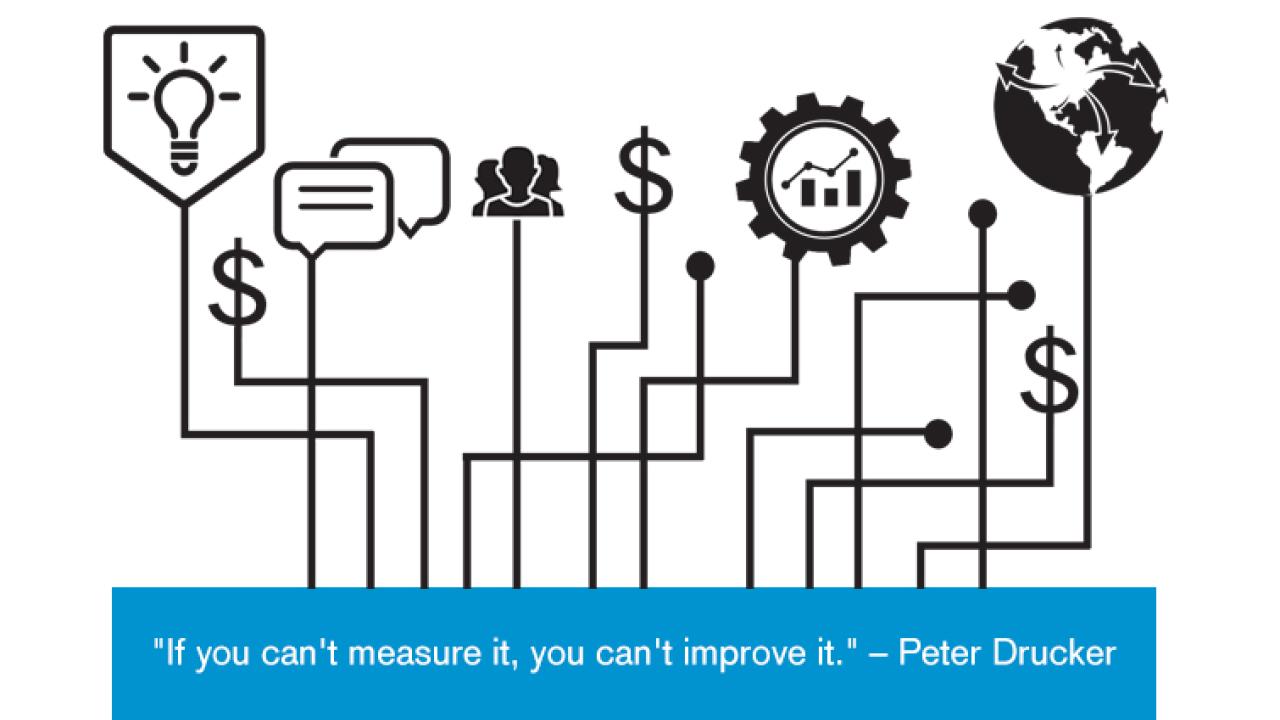
Chicago, IL, May 10, 2016 /3BL Media/ - Today, the Center for Financial Services Innovation (CFSI) released a landmark report that urges financial services providers to measure the financial health of their customers.
The communities where Chemours operates are also where we live, work, and play, and our mutual success is one and the same. We have a vested interest...
Everyone’s financial journey is different. We make intentional efforts to meet the individual needs of clients and communities through a diverse range...
Trane Technologies is a global climate innovator with a clear purpose to boldly challenge what’s possible for a sustainable world. See how embedding...