At the latest bi-annual Inogen Alliance Associates Meeting, hosted by Antea Group UK, one message came through clearly from global leadership: uncertainty is no longer a disruption, it’s the operating environment.
Ted Nordhaus is the Co-Founder and Executive Director of the Breakthrough Institute, an Oakland-based think tank which focuses on energy issues. We discuss Nordhaus's recent piece in Foreign Policy magazine, assess the damage that climate change denialism in the US has wrought on the planet, and examine the methods used by both pro-environment and anti-environment activists.
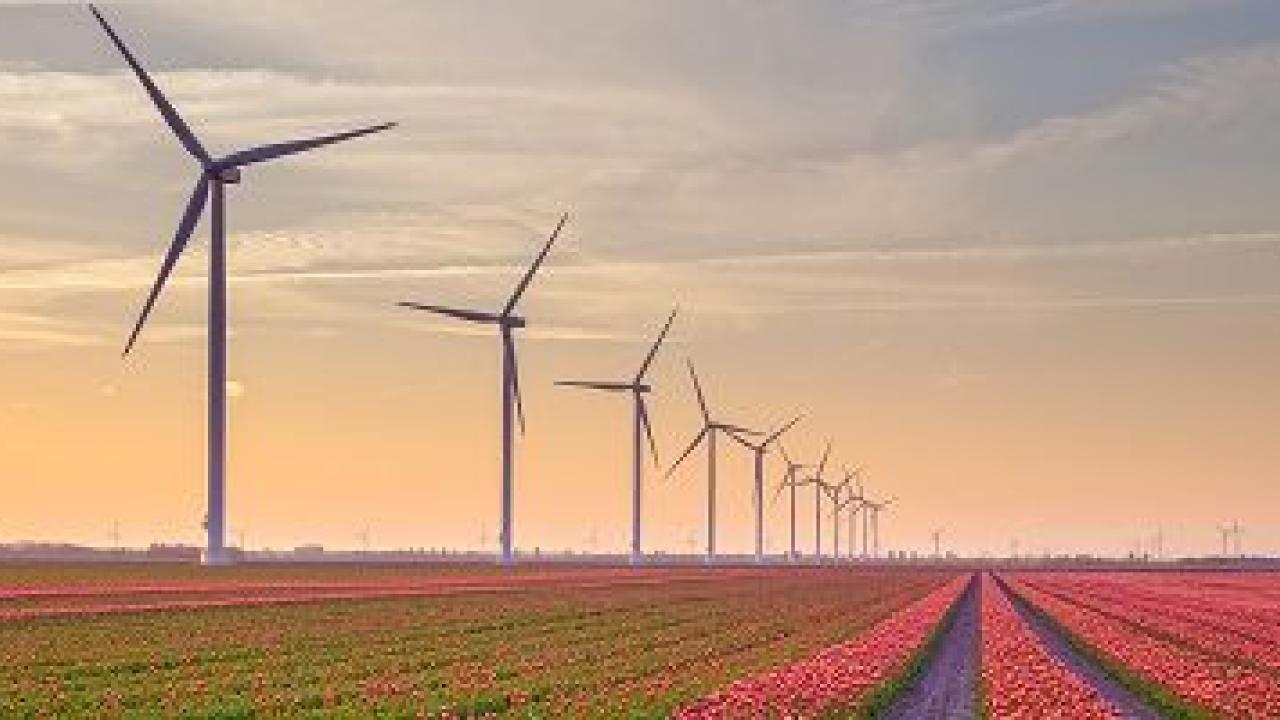
What sets NEO apart is that our assessment is focused on the parts of the system that are driving rapid change in markets, grid systems and business models. This includes the cost of wind and solar technology, battery storage, electricity demand and the uptake of EVs among others.
In 2016, Ecolab Inc., the global leader in water, hygiene and energy technologies and services, helped customers save 161 billion gallons of water at more than one million locations around the world. These savings, equivalent to the annual drinking water needs of more than 558 million people, are highlighted in the company’s 2016 Corporate Sustainability Report, available at www.ecolab.com.
Planet Water Foundation’s Project 24, an ambitious undertaking on World Water Day, built 24 AquaTowers in 24 communities in just 24 hours. These projects reached a total of 24,000 people. Xylem Watermark and 27 Xylem volunteers assisted in the construction of 6 of these community-based water systems this year on World Water Day, bringing clean water to thousands of people across five countries, including Cambodia, Colombia, India, Indonesia, and the Philippines.
The World Business Council for Sustainable Development (WBCSD)’s Cement Sustainability Initiative (CSI) published a report focusing on the availability of the latest technologies and the need to scale up research and development that can help the cement industry mitigate its greenhouse gas emissions.
At speeds of 30 kilometers per hour, velomobiles require 3.5 times less energy than bicycles. Compared to electric vehicles, velomobiles are about 20 times more efficient. They are arguably the most efficient form of transportation on the planet.
Much has been written about three trends that are important in answering this question – growing affluence in China, the power of e-commerce, and the export of Chinese goods to the rest of the world. These trends, in turn, are creating a greater demand for truth in labeling, and driving the growth of third-party verification and validation. This article steps back to take stock of where we are, and where we are headed.
Today’s major manufacturers can be measured by their commitment to optimal management and reduction of solid waste produced by their operations. Boeing is no exception.
Entergy’s 2025 performance report, “Energy for a better future” presents an overview of our company’s 2025 achievements, future plans and strategies...
Focus on preventing and treating malnutrition across life stages. Highlights include early detection, community-based treatment (e.g., MUAC screening...
Chemours’ Thermal & Specialized Solutions (TSS) business sits at the intersection of chemistry, physics, and design, making it a leading provider of...
Cascale shares insights regarding policy and regulation impacting the consumer goods industry, and highlights how it's supporting members prepare for...
Cascale organizes and participates in a series of events, leveraging its position as a global convener of close to half the sector to bring together...