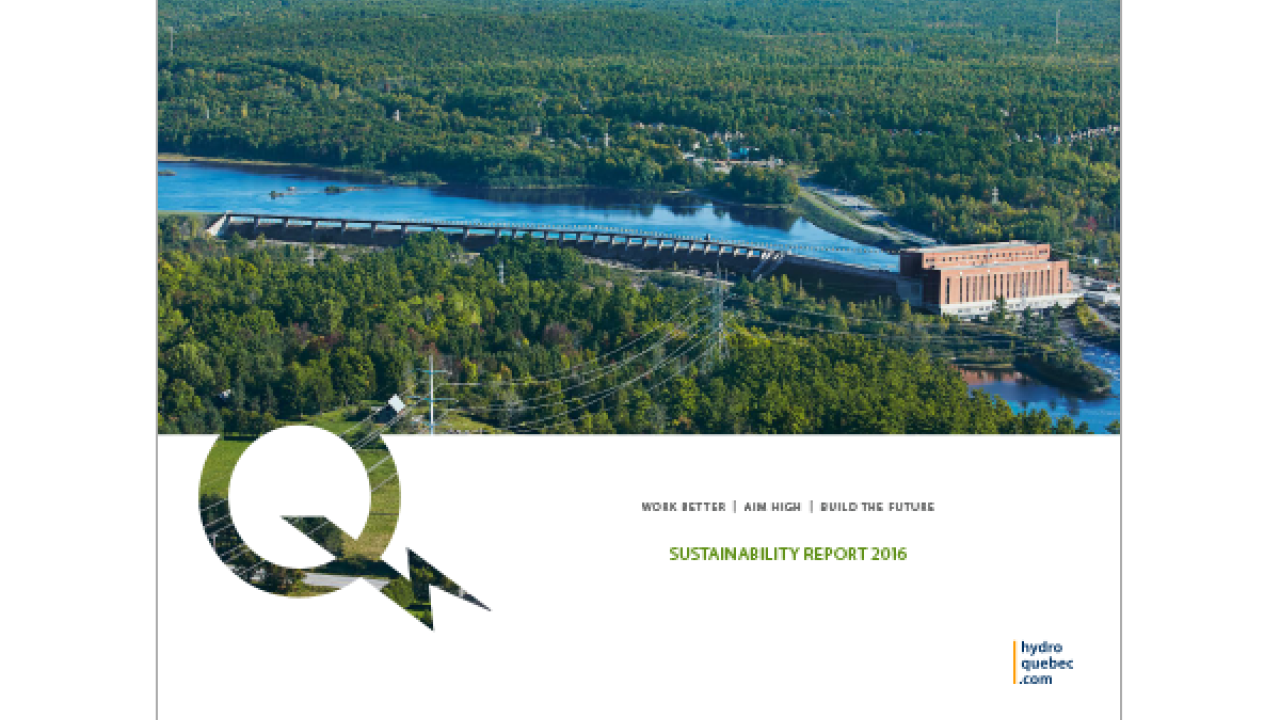
Rockwell Automation, Inc. (NYSE: ROK) published its 2025 Sustainability Report, which showcases how the company is bringing together technology and manufacturing for a more sustainable tomorrow.
For more than 30 years, we’ve been at the forefront of mobile technology – and we’re just getting started. Stemming from our industry expertise and long-time commitment to research and development, we are uniquely positioned to empower designers and developers to create new possibilities for our rapidly evolving world. We are at the hub of 5G innovation, spearheading the research efforts that will create the next global wireless revolution – just as we pioneered many of the building blocks for 3G and 4G.
I am thrilled to announce the launch of the 2016 Qualcomm Sustainability Report, which details key accomplishments from the past year of our sustainability journey.
In particular, I am excited about our new 2020 sustainability goals – a set of milestones to keep Qualcomm on track to realize our 2030 sustainability vision. Specifically, by 2020, we aspire to accomplish the following objectives.
We are at the dawn of the Fourth Industrial Revolution, defined by its velocity and volume, scope and scale, and systems impact. The foundation of this new era is squarely built upon the success of the "digital grid." The first three revolutions—defined by the introduction of steam and mechanization, electricity and computing, respectively—all had profound societal impacts, but they lacked the exponential rate of technological breakthroughs and complexity that define the fourth.
That's how much voluntary entry-level turnover cost the U.S. retail industry in 2016. And turnover rates are rising across industries from healthcare to banking.
General Mills’ 2017 Global Responsibility Report highlights much of our important work and progress over the last year across four key focus areas: our food, our planet, our workplace and our community.
Pentair, a global company dedicated to building a safer, more sustainable world, announces the release of its 2016 Corporate Responsibility (CR) Report.
Much attention has been paid to the concept that global warming will cause a dramatic drop in the value of carbon
reserves. A major shift towards non-carbon-based energy and non-carbon feedstocks for chemical processes could “strand” assets tied to oil drilling, coal mining, and fracking activities. Various groups have tried to quantify the downside risk to energy companies, if the response to climate change occurs.
However, there are other assets that climate change could strand. And, there are other sustainability trends that could result in stranding other types of assets. Both corporate managers and investors should probably examine these risks, too.
The business landscape is reorienting itself and you can almost hear priorities shifting toward change-readiness and the bigger picture. And in this...
Everyone’s financial journey is different. We make intentional efforts to meet the individual needs of clients and communities through a diverse range...
Trane Technologies is a global climate innovator with a clear purpose to boldly challenge what’s possible for a sustainable world. See how embedding...
Join us as we travel the world to uncover real stories of impact—from landfills and energy transition to workplace safety, emerging contaminants, and...
Trane Technologies is a global climate innovator with a clear purpose to boldly challenge what’s possible for a sustainable world. See how embedding...
The SCS Kingfisher certification mark is showing up on an increasing number of products around the world. It differentiates companies that are making...